

Mobile App Marketing Needs More Than A Good App.
Mobile app marketing starts with a hard truth. A great app does not automatically get downloads, loyal users, or steady revenue. The app stores are crowded, users have limited attention, and most people will not keep an app unless it solves a clear problem quickly. That means marketing cannot be treated as something that begins after launch. It has to be connected to the app strategy from the beginning.
The strongest mobile app marketing strategies are built on user behavior, not guesswork. Businesses need to understand who is downloading the app, where users are coming from, which features they use, when they leave, what keeps them engaged, and which campaigns bring in the best users. Without that information, marketing becomes expensive trial and error.
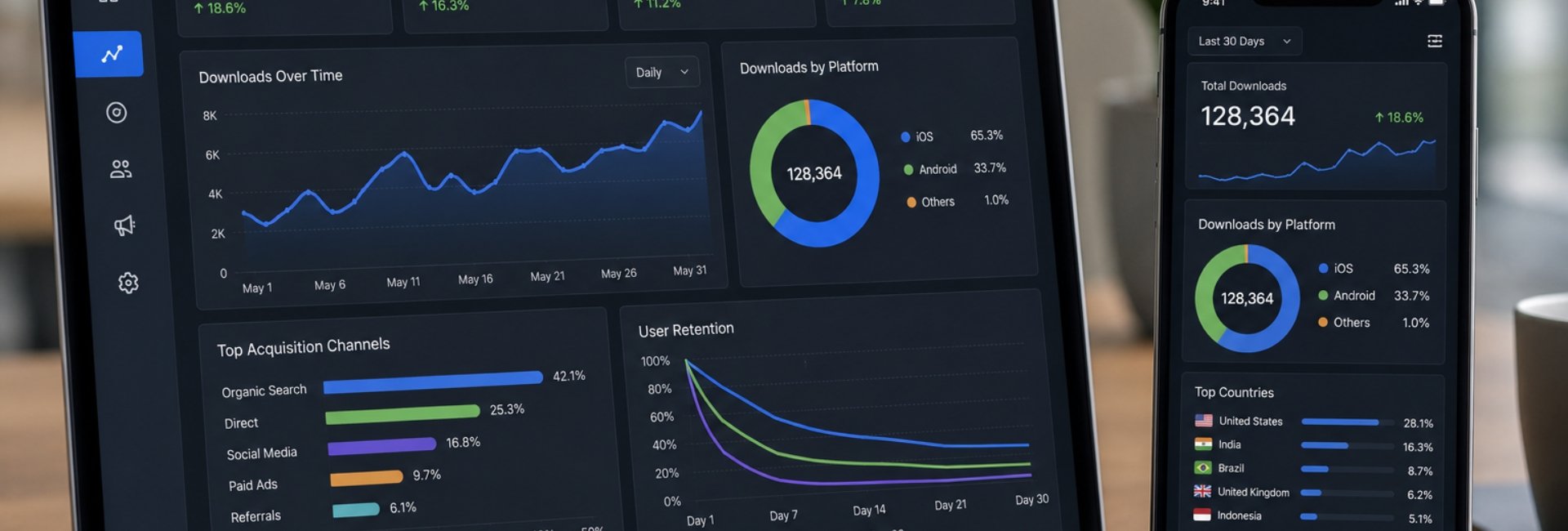
This is where mobile app analytics becomes valuable. Analytics helps turn raw activity into useful insight. Instead of only looking at download numbers, a business can study app retention, app engagement, user acquisition, onboarding performance, app store optimization, campaign results, and long term mobile app growth. When those numbers are reviewed correctly, they help shape smarter decisions.
Data Shows What Users Actually Do.
One of the biggest mistakes in mobile app marketing is assuming users behave the way the business expects. A founder may believe the main feature is obvious, but users may ignore it. A marketing team may believe one ad channel is working because it brings downloads, but those users may leave after one session. A developer may think onboarding is simple, but analytics may show that people are dropping off before they ever reach the main screen.
App user behavior gives the business a clearer picture. It shows which screens get attention, which buttons are clicked, which features bring people back, and where users stop moving forward. This information helps improve both the product and the marketing message. When you understand the behavior inside the app, you can promote the features that users truly value.
Mobile app analytics also helps businesses avoid wasting money. A campaign may look successful because it produces downloads, but downloads alone do not prove quality. If those users do not create accounts, complete onboarding, make purchases, book services, or return later, the campaign may not be profitable. Marketing needs to focus on useful growth, not vanity numbers.
The Right Analytics Tools Turn Activity Into Direction.
A serious app marketing strategy needs reliable tracking. Tools such as Google Analytics, Firebase Analytics, and Mixpanel can help businesses understand how people find the app, how they move through the experience, and which actions lead to stronger engagement. These tools help connect marketing activity to real product usage.
Firebase Analytics is especially useful for mobile app development because it connects closely with app events, user properties, crashes, engagement, notifications, and other Firebase services. It can help teams understand onboarding steps, feature usage, retention patterns, and conversion behavior. For apps already using Firebase, it can become an important part of the mobile app growth system.
Google Analytics can help connect broader marketing efforts, website traffic, campaigns, and user journeys. Mixpanel is useful when a business needs deeper event tracking, funnels, cohorts, and product behavior analysis. The best tool depends on the app, the business model, and the questions the team needs answered.
Analytics tools are only useful when the team knows what to track. Before launching app marketing campaigns, the business should define the important actions. That may include account creation, subscription signup, booking completion, product purchase, saved item, message sent, workout completed, recipe viewed, course started, or any other action that shows real user value.
Mobile App Marketing Should Track The Metrics That Matter.
The right metrics depend on the type of app, but most businesses should pay close attention to the numbers that reveal acquisition, engagement, retention, and growth quality.
- User acquisition sources that show where downloads, signups, and paying users are coming from.
- App retention rates that show how many users return after the first day, first week, and first month.
- App engagement metrics that show which features, screens, and actions users interact with most.
- Onboarding completion rates that reveal whether new users understand the app quickly enough.
- Churn rate that shows how many users stop using the app after downloading or signing up.
- Lifetime value that helps compare user revenue against marketing cost.
- Campaign conversion rates that show which app marketing campaigns produce valuable users.
- App store optimization performance that tracks impressions, page views, downloads, and listing conversion.
These metrics help businesses avoid shallow reporting. The goal is not only to know how many people downloaded the app. The goal is to understand which users stay, which campaigns produce value, and which parts of the app need improvement.
Getting Downloads Is Only The First Step.
User acquisition is one of the most visible parts of mobile app marketing. It includes the channels and campaigns used to bring new people into the app. This can involve social media ads, search ads, influencer partnerships, content marketing, email campaigns, referral programs, app store search, landing pages, and local promotion.
The mistake many businesses make is treating every download as equal. A user who downloads the app and never opens it again does not carry the same value as a user who creates an account, completes onboarding, invites a friend, makes a purchase, or returns weekly. Good user acquisition focuses on quality, not just volume.
Analytics helps identify which channels bring the right users. A paid ad may produce cheaper downloads, but a referral campaign may produce users who stay longer. A social campaign may create attention, but search traffic may bring users who are closer to taking action. Mobile app marketing becomes stronger when the business understands these differences.
App Store Optimization Helps Users Find And Trust The App.
App store optimization is a major part of mobile app marketing because the app listing often decides whether someone downloads or moves on. A strong app store page explains the value of the app quickly. It uses clear wording, relevant keywords, strong screenshots, a useful description, and a visual identity that matches the product.
ASO should not be written like a feature dump. Users want to know what the app helps them do. The title, subtitle, description, screenshots, and preview content should make the benefit easy to understand. If the app saves time, helps users book services, tracks progress, connects communities, manages tasks, or supports learning, that value needs to be clear right away.
App store optimization also needs testing. Different screenshots, headlines, descriptions, and calls to action can affect download rates. App store analytics can show impressions, product page views, download conversion, and keyword performance. Those numbers help the business improve the listing over time instead of guessing.
App Retention Is Where Growth Becomes Real.
Mobile app growth does not come from downloads alone. It comes from people returning. App retention shows whether users found enough value to come back after the first session. If retention is low, the business may need to improve onboarding, messaging, features, notifications, performance, or the overall product experience.
Retention problems can reveal a mismatch between the marketing promise and the app experience. If ads promote one benefit but the app opens to a confusing flow, users may leave quickly. If the app store listing promises an easy process but the first screen asks for too much information, users may not continue. Marketing and product experience need to match.
Analytics can help identify where retention breaks down. Are users leaving during onboarding? Are they using one feature but ignoring another? Are they returning after push notifications? Are paying users behaving differently from free users? These questions help teams improve the app in ways that support long term growth.
Personalized Campaigns Feel More Relevant To Users.
Personalization is one of the strongest ways to improve app marketing campaigns. When users are segmented by behavior, interests, account type, location, purchase history, or engagement level, marketing messages can become more useful. A new user does not need the same message as a loyal customer. A user who abandoned onboarding does not need the same message as someone who just upgraded.
Mobile app analytics makes this possible by showing patterns across user groups. A fitness app may segment users by goals, workout activity, and completed sessions. An ecommerce app may segment users by browsing history, cart behavior, and purchase frequency. A SaaS app may segment users by account role, feature usage, and subscription tier.
Personalization should still respect privacy and user trust. The goal is not to make users feel watched. The goal is to make communication more helpful. Clear preferences, responsible data use, and relevant messaging can improve app engagement without making the experience feel intrusive.
Testing Turns Mobile App Marketing Into A Learning System.
Mobile app marketing should be tested continuously. A campaign that worked last month may not work the same way after audience behavior changes, ad costs shift, competitors adjust, or new features launch. Testing helps businesses learn what actually improves downloads, engagement, retention, and revenue.
A/B testing can be used for app store screenshots, ad copy, landing pages, email subject lines, push notifications, onboarding flows, pricing messages, and feature announcements. Small changes can create meaningful improvements when they are measured carefully.
Testing should be structured around a clear question. For example, does a shorter onboarding flow increase account creation? Does a different screenshot improve app store conversion? Does a push notification bring users back without increasing opt outs? Does a referral offer bring higher quality users than paid ads? Data gives those answers more weight.
Data Driven Marketing Must Respect User Privacy.
Data analytics is powerful, but trust matters. Users are more aware of privacy than ever. If an app collects data, the business should be clear about what is collected, why it is used, and how users can control their experience. Mobile app marketing should never depend on confusing or careless data practices.
Privacy concerns can damage user trust quickly. Apps should follow applicable privacy rules, use clear privacy policies, avoid collecting unnecessary data, and protect analytics access. Teams should also review third party tools carefully because analytics platforms, ad networks, email systems, and customer support tools may all touch user data.
Responsible data use supports better marketing because users are more likely to engage with a brand they trust. A business can still use data to improve campaigns, personalize messages, and increase app engagement while respecting user privacy and keeping information protected.
Mobile App Marketing Is About Learning What Drives Growth.
Mobile app marketing is not a one time launch push. It is an ongoing process of learning, testing, improving, and matching the app experience to what users actually need. Data analytics helps businesses see what is working, what needs attention, and where growth opportunities exist.
The strongest app marketing strategy connects acquisition, onboarding, retention, engagement, app store optimization, privacy, and campaign performance. Each part affects the others. If the app listing brings the wrong users, retention suffers. If onboarding is confusing, paid ads waste money. If engagement is low, push notifications will not fix the deeper problem. Data helps reveal those connections.
Tools such as Google Analytics, Firebase Analytics, and Mixpanel can support better decisions, but tools alone are not the strategy. The real value comes from asking better questions and using the answers to improve the app, the message, and the user journey.
When businesses use mobile app analytics with purpose, mobile app marketing becomes more focused. Campaigns become easier to measure. Users become easier to understand. Growth becomes less dependent on guessing. That is how an app moves from launch excitement to long term momentum.
