

Website User Experience Decides How Visitors Feel And What They Do Next.
Website user experience is one of the biggest factors behind whether a visitor stays, leaves, calls, buys, books, or fills out a form. A website can look polished at first glance, but if the pages are hard to use, slow to load, difficult to read, or confusing on mobile, the design is not doing its job. Good user experience web design removes friction so visitors can understand the business, find the right information, and take action with confidence.
Online competition is stronger than ever, and users have very little patience for websites that make simple tasks difficult. If navigation is unclear, if buttons are hard to tap, if a page takes too long to open, or if the content feels disorganized, visitors will usually move on. They may not complain, send feedback, or give the business another chance. They simply leave.
That is why website user experience needs to be treated as a core part of web design strategy, not a final design detail. It connects website navigation, website load time, responsive web design, accessibility, content structure, calls to action, and conversion optimization into one complete visitor journey. When those pieces work together, the website feels easier to trust.
A Strong User Journey Makes The Website Easier To Follow.
A visitor should never have to work hard to understand what a website offers. The user journey should guide people from first impression to the next clear step. That may mean reading about a service, viewing examples of work, checking pricing, contacting the business, scheduling a consultation, browsing products, or learning more through a blog post.
Good website user experience begins with clarity. The homepage should explain who the business helps, what problem it solves, and what the visitor should do next. Service pages should answer real questions. Contact forms should feel simple. Calls to action should stand out without feeling forced. Every section should earn its place on the page.
Professional web design services focus on more than visuals because the structure behind the page matters. A beautiful layout can still fail if the content order is confusing. A bold headline can still miss the mark if the visitor does not understand the offer. A stylish button can still underperform if it appears too late or uses unclear wording.
A well planned user journey creates less hesitation. Visitors can move through the site naturally, understand the business faster, and make decisions without feeling lost.
Website Navigation Should Help Visitors Move Without Guessing.
Website navigation is one of the most important parts of website user experience. If people cannot find what they need quickly, they are less likely to stay. A menu should be simple, organized, and written in language visitors understand. Labels such as Services, About, Portfolio, Blog, and Contact are often more useful than clever names that require interpretation.
Clear navigation also helps search engines understand the structure of the website. When pages are organized logically, both users and search engines can move through the site more easily. This supports SEO while improving usability. A website with strong navigation feels more professional because the visitor can move with purpose instead of clicking around randomly.
Breadcrumbs can also support website navigation, especially on larger websites with multiple service pages, product categories, blog categories, or learning resources. They help visitors understand where they are and how to move back to a previous section. This can lower bounce rate by encouraging people to keep exploring instead of leaving when they reach a deeper page.
The best navigation systems are not overloaded. Too many menu items can create decision fatigue. A clean structure helps visitors focus on the most important paths and makes the website feel easier to use.
Website User Experience Should Fix The Problems Visitors Feel First.
A strong website should make the visitor experience easier, faster, and more useful from the first click.
- Clear website navigation that helps visitors find services, pricing, contact information, and important pages without confusion.
- Fast website load time that keeps visitors from leaving before the page opens.
- Responsive web design that works well across phones, tablets, laptops, and desktops.
- Website accessibility that supports readable content, keyboard navigation, alt text, contrast, and inclusive use.
- Strong content structure that explains the business clearly and guides visitors toward the next step.
- Conversion optimization that improves calls to action, forms, landing pages, and customer decision paths.
- Ongoing performance review using analytics, user feedback, testing, and regular website updates.
These priorities work together. A fast website still needs clear navigation. A beautiful website still needs accessibility. A mobile friendly website still needs strong calls to action. User experience improves when the full journey is designed with purpose.
A Mobile Friendly Website Is Required For Modern Visitors.
A mobile friendly website is no longer optional. Many visitors will first find a business from a phone while searching, comparing options, reading reviews, checking services, or trying to make contact. If the mobile version is crowded, slow, or difficult to use, the website may lose the opportunity before the visitor ever reaches out.
Responsive web design allows the layout to adjust across screen sizes. Text should remain readable without zooming. Buttons should be large enough to tap. Menus should open clearly. Images should scale properly. Forms should be easy to complete. Visitors should not feel like they are fighting the website just to get basic information.
Mobile user experience also affects conversion optimization. A contact form that works well on desktop may feel too long on a phone. A call button may need to appear higher on the page. A service section may need to stack differently. A pricing table may need a simpler layout. These details matter because mobile visitors often make decisions quickly.
Professional web design services should always review mobile behavior before launch. A website should not only look responsive in a design preview. It should feel usable with real content, real images, real forms, and real calls to action.
Website Load Time Can Make Or Break The First Impression.
Website load time has a direct impact on website user experience. Visitors expect pages to open quickly. When a site feels slow, users often assume the business is outdated, unreliable, or not worth waiting for. That reaction may seem harsh, but online behavior moves fast.
Slow websites often come from oversized images, heavy scripts, poor hosting, bloated themes, too many plugins, unoptimized fonts, and unnecessary animations. These issues may not be obvious when looking at the design, but visitors feel them immediately. The website may look good once it loads, but the delay can still cost engagement.
Improving website performance can include compressing images, reducing unused code, limiting unnecessary scripts, improving hosting, using caching, reviewing plugins, and testing pages with tools such as Google PageSpeed Insights. Small improvements can create a smoother experience across both desktop and mobile devices.
Speed supports conversions because it helps people stay focused. A fast website lets users read, browse, click, and submit forms without interruption. That creates a stronger path from interest to action.
Website Accessibility Creates A Better Experience For Everyone.
Website accessibility means making a site usable for more people, including visitors who rely on screen readers, keyboard navigation, captions, readable contrast, and clear structure. Accessibility should not be treated as an extra feature. It is part of responsible web design and a major part of user experience.
Accessible websites use descriptive alt text for images, meaningful headings, proper labels on forms, clear focus states, strong color contrast, readable font sizes, and links that make sense. These choices help visitors who use assistive technology, but they also help everyone else navigate the site more easily.
Accessibility also supports trust. When a website is readable, organized, and easier to use, the business feels more thoughtful and professional. A confusing website can make users feel excluded. A clear and accessible website invites more people to interact with the brand.
A strong web design strategy should include accessibility checks throughout the project, not only after the site is finished. It is easier to build accessibility into the structure than to repair every issue later.
Better UX Helps Visitors Stay Longer And Explore More.
Website engagement improves when visitors feel comfortable moving through the site. They are more likely to read additional sections, view service pages, browse portfolio work, watch videos, complete forms, and return later. Good website user experience encourages exploration without forcing it.
Engagement is not only about adding videos, animations, sliders, or interactive features. Those elements can help when used with purpose, but they can also slow the site down or distract from the message. The strongest engagement often comes from clear content, useful visuals, strong headings, clean layouts, and relevant calls to action.
A business website should answer the questions visitors already have. What does the company do? Who does it help? Why should someone trust it? What happens next? How do they get started? When those answers are easy to find, visitors are more likely to stay engaged.
Professional web design services can help organize the experience so each page supports the next step. That turns the website from a digital brochure into a working business tool.
Conversion Optimization Depends On A Clear User Path.
Conversion optimization is closely tied to website user experience. A conversion may be a phone call, form submission, appointment booking, quote request, purchase, email signup, consultation request, or app download. Whatever the goal is, the website should make the next step easy to understand and easy to complete.
Many websites lose conversions because the path is unclear. The call to action may be buried too low on the page. The form may ask for too much information. The service page may not explain enough. The button text may be vague. The visitor may be interested, but the website does not guide them forward.
A strong conversion path includes clear messaging, trust signals, useful content, simple forms, strong calls to action, and a layout that removes distractions. Testimonials, case studies, project examples, security badges, and clear service descriptions can all help visitors feel more confident before taking action.
Better UX does not pressure visitors. It gives them the information they need at the right time so taking the next step feels natural.
Great Website User Experience Needs Regular Attention.
Website user experience is not finished after launch. Visitor expectations change, business offers change, search behavior changes, and technology changes. A website that felt strong two years ago may now need updates to improve speed, content, mobile layout, accessibility, or conversion performance.
Regular reviews help identify what needs attention. Analytics can show which pages receive traffic, where users leave, which calls to action perform well, and which pages may need better content. User feedback can reveal issues that numbers alone may not show. Testing forms, buttons, menus, and mobile layouts can prevent small problems from becoming costly.
Ongoing updates can include refreshing content, improving images, simplifying navigation, updating plugins, checking accessibility, reviewing SEO, improving page speed, and adjusting calls to action. These improvements keep the website aligned with the business and the people using it.
A website should grow with the business. When user experience is reviewed regularly, the site remains more useful, more trustworthy, and more likely to support business goals.
Website User Experience Is About Making Every Visit Easier.
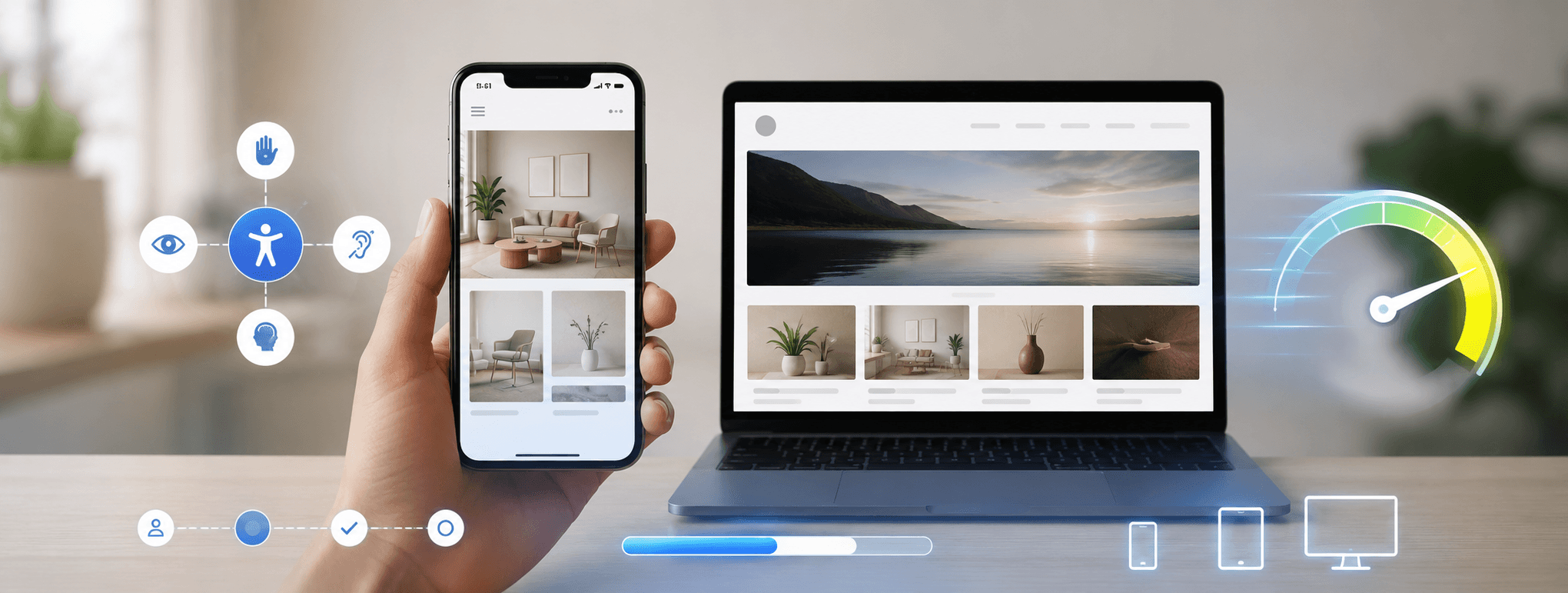
Website user experience determines how people feel when they interact with a business online. If the website is easy to navigate, fast to load, readable on mobile, accessible, and clear in its messaging, visitors are more likely to trust the business and take action.
The best user experience web design does not happen by accident. It comes from planning the journey, understanding visitor needs, organizing content, improving website navigation, reducing load time, designing for mobile, and making the site usable for more people.
For businesses, this matters because the website is often the first serious conversation with a potential customer. A weak experience can create doubt before the business ever gets a chance to speak. A strong experience can build confidence before the visitor makes contact.
A website should not simply exist online. It should help people understand, trust, and choose the business. That is the real value of website user experience.
